Preserving North Park’s
Architectural and Cultural History

North Park Urban Development

(1907-present)

Timeline Collage
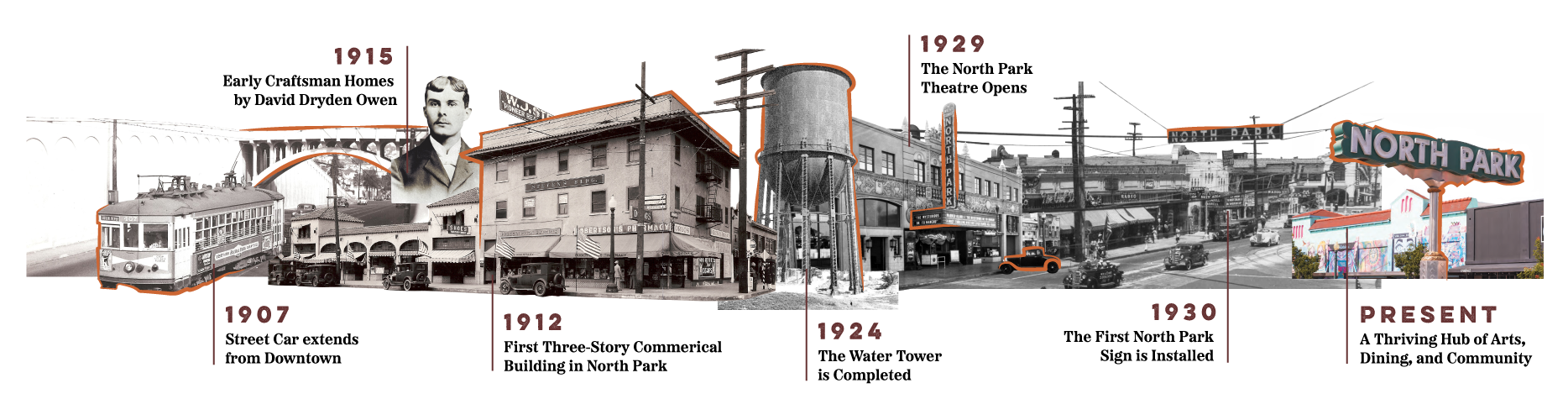
A single streetcar line was extended from downtown San Diego along University Avenue with a cut through the Georgia Street hill, and a short redwood bridge spanned the gap in 1907. The second Georgia Street Bridge made out of reinforced concrete replaced that small bridge in 1914, and a larger cut with vertical walls allowed double tracking of Streetcar line # 7, greatly improving public transportation to the growing community. The concrete Georgia Street Bridge was added to the National Register of Historic Places in 1998. Read more in our books.
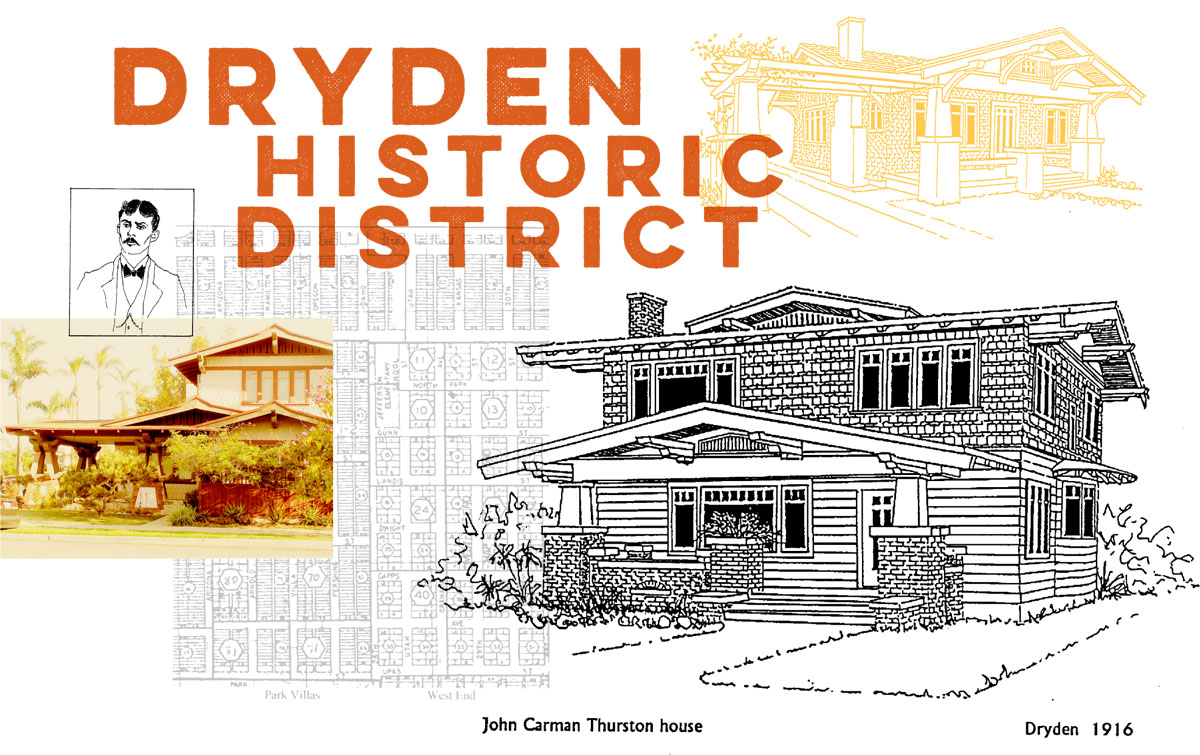
The first subdivision maps for what would become Greater North Park were filed with San Diego County in the 1870s, although it would be at least 30 years before many houses were built there. David Owen Dryden began building homes in what is now the North Park Dryden Historic District along 28th Street and Pershing Avenue from Upas Street to Landis Street in 1915. He is a recognized Master Builder who specialized in architecturally complex Craftsman bungalows during the early 1900s.
The Carter Construction Company built this three-story multi-use building on the corner of 30th Street and University Avenue for the Stevens-Hartley family for use, in part, as their real estate office that relocated from downtown San Diego to North Park in 1913. That same year, a pharmacy was located on the ground floor – the first in a series of drug stores to occupy the corner for more than 80 years. Until the late 1920s, the pharmacy included a counter that served as Post Office #8 for the North Park community. The current building has been significantly modified, but in 1925 the building had cloth awnings, neon signage and a projecting tile roof above the third-floor windows. The arcaded annex extending to the west was built in 1927.
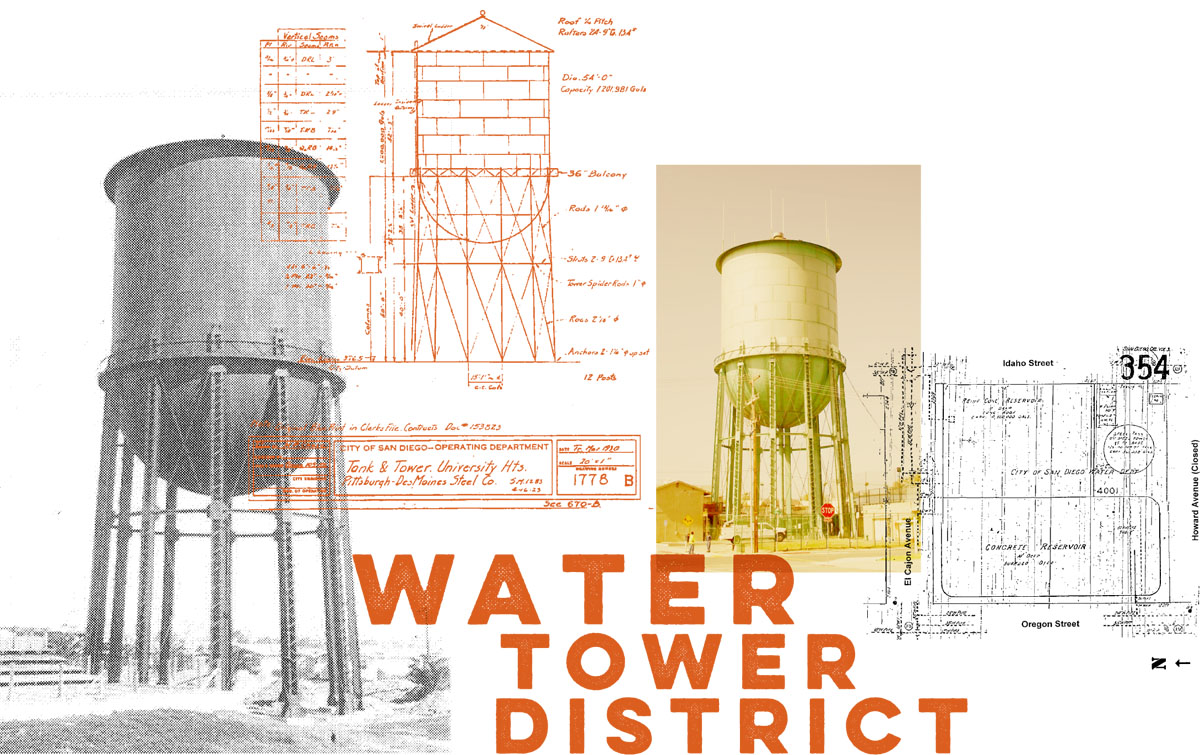
The North Park Water Tower was completed in 1924, greatly improving the water system with 1.2 million gallons of storage capacity at height to provide adequate pressure. The now-empty Water Tower was added to the National Register of Historic Places in 2013, and locally designated in 2015.
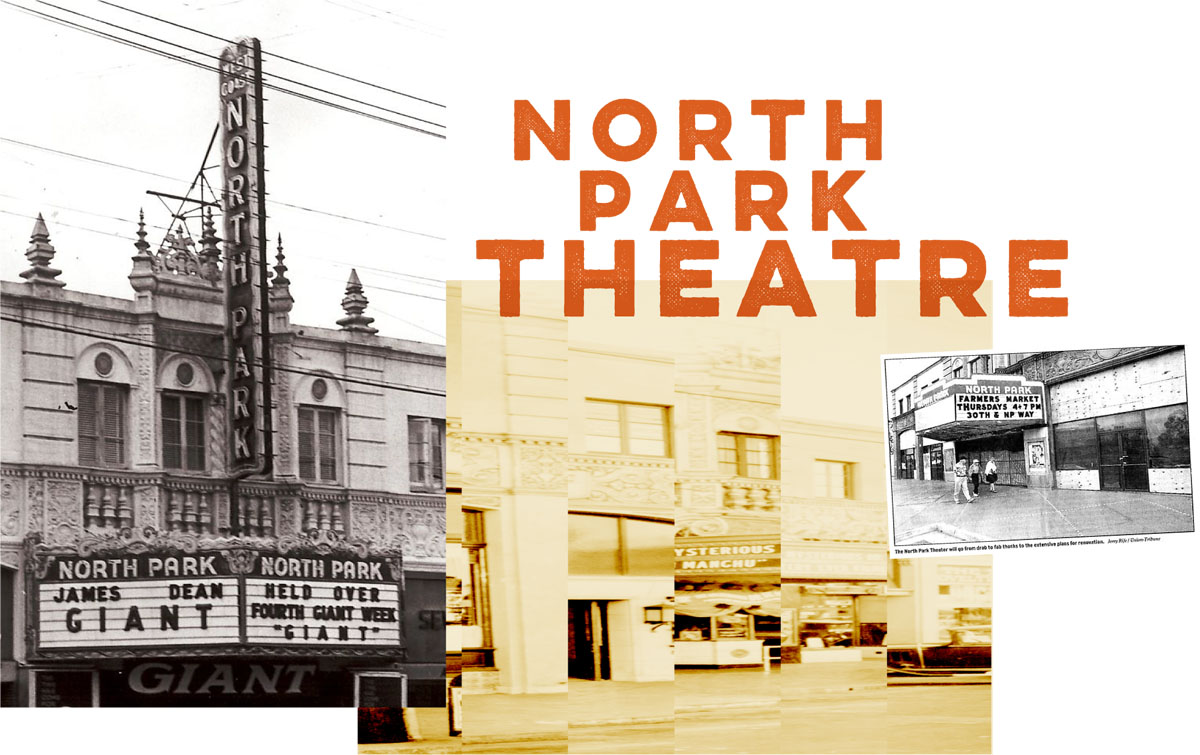
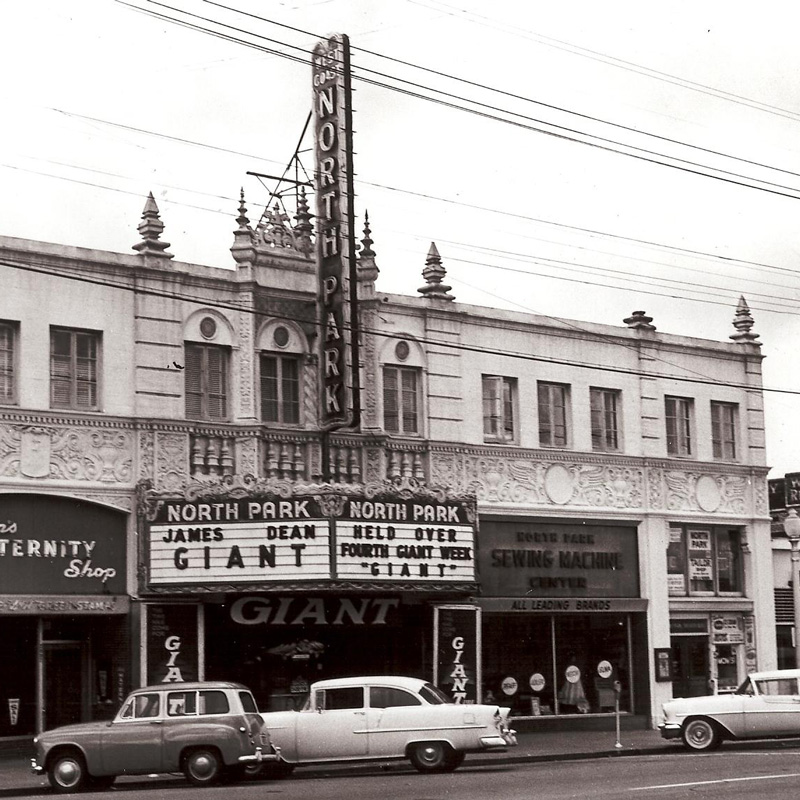
The North Park Theatre opened in January 1929, designed for both new “talking” motion pictures and live performances. In 2005, the restored North Park Theatre reopened – a key element of the revitalization of North Park.
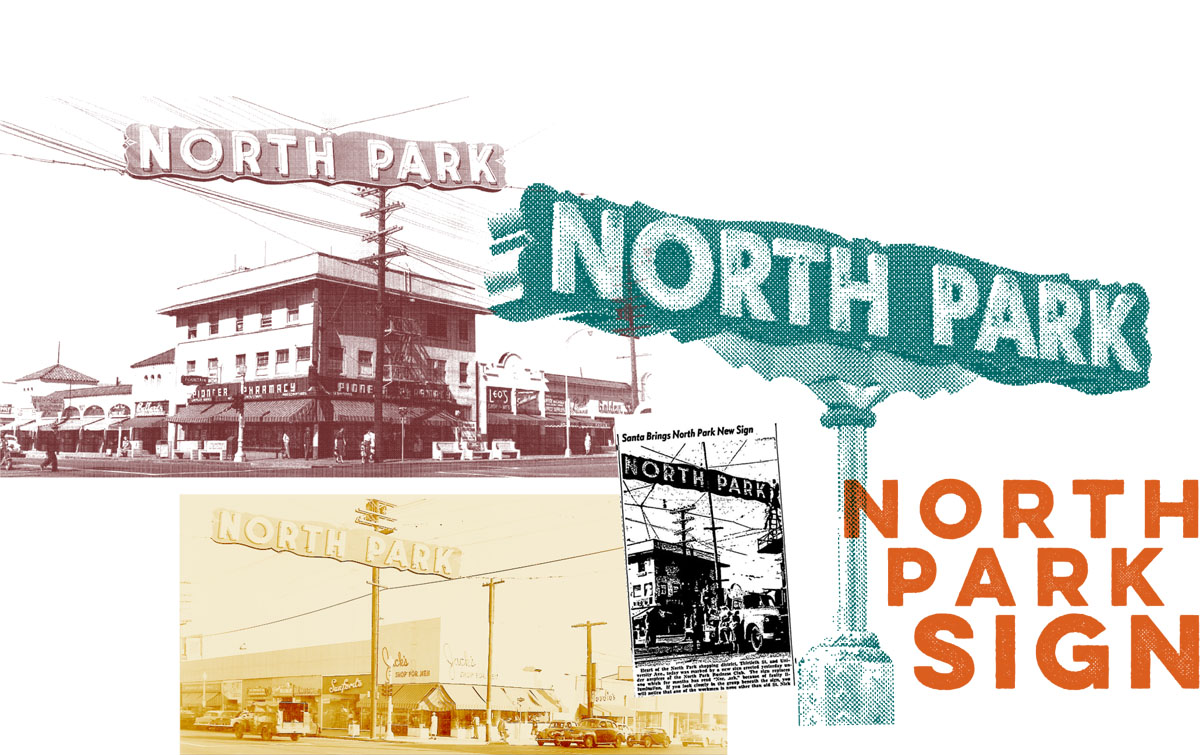
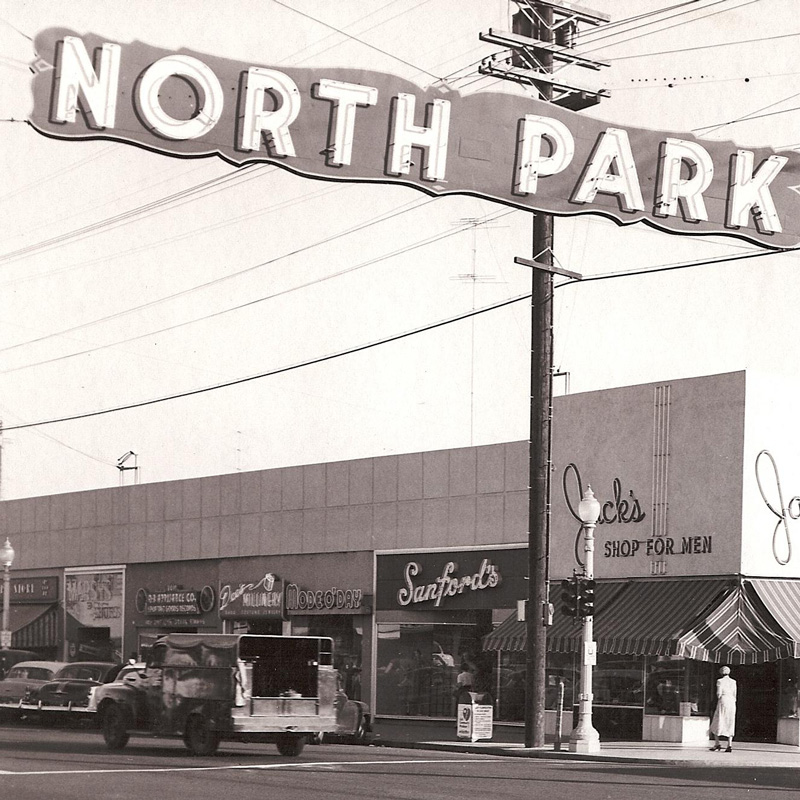
The first North Park sign was hung across the intersection of 30th Street and University Avenue in 1935. In 1948 that sign was replaced with a scalloped shape version which would be there until 1966 when it was taken down. The community never forgot the sign, and in 1993 a new version was placed in the median of University Avenue near 30th Street.
Present

A Thriving Hub of Arts, Dining, and Community

Timeline Collage
NPHS train

North Park, Then and Now

North Park was first subdivided in the 1870s by early San Diego pioneers, though development remained limited for decades. Growth began in the early 1900s when streetcar lines connected the area to downtown, encouraging residential and commercial expansion. Today, North Park is a walkable community known for its Craftsman and Spanish Revival architecture.

Learn more on the Resources page and in Books.
Become a Member

Supporting members receive a monthly summary of our activities and are the first to learn about our home research, events and tours.

Join

Support Local History

We are an all-volunteer 501(c)(3) with no paid staff or office. Donations fund essential operating expenses and are tax-deductible as permitted by law.

Donate
Wedding at North Park
Normal School Along ECB 1912
Hartley Row 1953
Man on horse
North Park Theatre 1950s
North Park Trolley University and Alabama

Subscribe to our Newsletter